
Grinding & Fabrication

Home » Products » Grinding & Fabrication

We’ve been providing grinding and precision services to local (UK) industry for the last 30 years, and have supplied a wide range of components for Toolmakers, Brick Makers & Concrete Formers, Machine Tools, and Stainless Steel Stockists. Our facilities are world class and we are constantly setting the standard for our competition.

Grinding & Fabrication

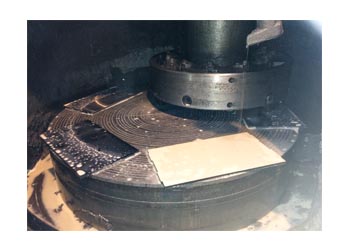
Surface Grinding

Hoverdale are UK leaders in surface grinding, offering Lumsden Grinding Services. We are the only company in the UK that can undertake stainless steel & aluminium grinding.
Grinding & Fabrication

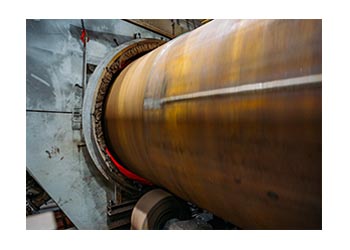
Induction Brazing Services

Manufacture of components including the applications of Sintered Tungsten Carbide Platelets to produce Wear Resistant component parts.
Grinding & Fabrication

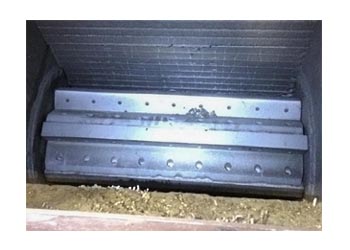
Knife & Blade Manufacturing

Long-life blades, manufactured to order.
Grinding & Fabrication

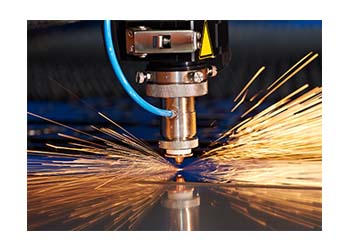
Plasma Cutting Services

High definition automated plasma cutting of Stainless Steel and all other types of steels.

Frequently Asked Questions

1. What does grinding and fabrication include?
Grinding and fabrication usually covers a mix of precision finishing and metalworking services used to prepare, repair or manufacture industrial parts. This often includes surface grinding, precision grinding, plasma cutting, induction brazing, blade manufacture, ground blanks and specialist work on wear-resistant or difficult-to-machine metals for engineering, tooling and production environments.
Surface grinding is used to create a flatter, smoother and more accurate finish on a metal component. It is often chosen when parts need close thickness control, better surface quality or improved consistency before assembly, machining or use in production. It is especially useful for plates, tooling, machine parts and components that must sit accurately against other surfaces.
Lumsden grinding is a form of grinding used to remove material from metal plates and components using a dedicated grinding process. In practice, the term is commonly used for heavy-duty plate grinding where fast stock removal, improved flatness and a more uniform finish are needed. It is often selected for larger areas where conventional milling may be less efficient.
Grinding can be the better choice when the priority is flatness, surface finish or consistent thickness across a component. On suitable jobs, it can remove material efficiently while also producing a cleaner and more uniform finish than some alternative machining methods. It is often preferred where accuracy and finish are just as important as material removal speed.
Flatness matters because even small inconsistencies can affect assembly, alignment, sealing, movement and wear. If a part is not flat enough, it may rock, distort under load, fit badly or create problems further down the production process. In engineering and fabrication work, flatness is often critical for parts that must mate accurately with other surfaces.
Yes, stainless steel can be ground accurately, but it needs the right process, setup and work-holding method. Because stainless steel behaves differently from standard carbon steels and can be harder to hold in some grinding operations, experience and process control matter. When handled correctly, grinding can produce a smooth, accurate finish suitable for demanding industrial applications.
Aluminium grinding can be more specialist than grinding standard steels because the material behaves differently during processing and may require different work-holding and handling methods. The key is achieving a clean, controlled finish without compromising the surface. For customers, this matters most when the part needs to be flat, consistent and ready for the next stage of manufacture.
Ground blanks are metal pieces prepared to size and finish before they go into further machining, assembly or tooling processes. They are often supplied so a customer can move straight to CNC machining or another production stage with less preparation work. This can help save workshop time and improve consistency, especially for repeat parts and production runs.
CNC plasma cutting is valued for its speed, repeatability and ability to produce clean, accurate profiles in conductive metals. It is widely used where components need to be cut efficiently from sheet or plate, especially when there are multiple parts, repeated shapes or more intricate profiles involved. It can also reduce prep time before fabrication or finishing.
Plasma cutting is commonly used on conductive metals such as mild steel, stainless steel and aluminium. It is particularly useful where a workshop needs a flexible cutting method for different grades and part shapes without moving between several cutting systems. The process is widely used for fabrication work, blanks, wear parts and general industrial component manufacture.
Induction brazing is used to join metals using controlled heat, often where consistent bonds, repeatability and production efficiency are important. It is especially useful for manufacturing wear-resistant parts, joining carbide materials, and producing blades or scrapers that need a reliable bond without excessive clean-up. The process is popular because heat can be applied precisely where it is needed.
Induction brazing is often chosen for wear-resistant parts because it offers controlled, localised heating and repeatable joint quality. That matters when attaching hard materials such as carbide to a steel base, where consistency and bond strength are important. For high-wear components, a reliable brazed joint can make a big difference to service life, performance and maintenance frequency.
Blade life is usually improved by the right combination of material selection, heat treatment, edge quality, wear-resistant design and correct manufacturing tolerances. In demanding environments, poorly made blades wear faster, lose performance and need replacing more often. A well-made blade should deliver more consistent cutting, lower downtime and better value over its working life.
That depends on the condition of the part, the critical tolerances involved and how quickly it needs to go back into service. In some cases, regrinding, rebrazing or reworking a component is the most cost-effective route. In others, a new part is the better option because it restores full performance, accuracy and expected service life.
The most useful information includes the material grade, dimensions, quantity, required finish, tolerances, drawing files and whether the part needs cutting, grinding, brazing or full fabrication. If the job is a replacement part, photos or a worn sample can also help. Clear technical information makes it easier to match the process to the application and avoid delays.

Can We Help?

Our products are used in 5 continents and our expertise spans the globe.
Book a site visit now! The savings will more than pay for your time or your money back.

MATT BEVERLEY

A time served Mechanical engineer Matt’s background includes many high-profile projects within the Automotive Industry: The Rolls Royce Phantom, Rolls Royce Cullinan, Spyker Le-Mans racing teams, Bentley, Aston Martin, and Airbus A380. This history and knowledge of complex manufacturing and engineering projects have been transferred and further developed into the bulk material handling sector. Matt has work in Europe, North America, Indonesia, and China

He joined the bulk solids and bulk handling industry in 2019 as Managing Director of Hoverdale UK Ltd and subsequently completed a Management buyout in July 2020. The business has grown yearly, increased employment, its customer base, and worldwide reputation, and disrupted the market with groundbreaking innovative technology. Since Matt took over Hoverdale, the company has filed four patents for innovation; one was granted in 2023 for a design to improve bulk handling. The success had been driven by delivering tailored solutions to the waste recycling sectors that keep material flowing out and money flowing in.

Awards Include

  • 2024 – Shapa company of the Year
  • 2024- Shapa Innovation in Technology
  • 2024- MHEA Engineer of the year
  • 2021 – MHEA Innovation of the year
  • 2021- IMechE Innovation award

Current Positions Include.

  • Group Chairman Hoverdale UK Ltd
  • President (MHEA) Material Handling Engineers Association
  • Vice Chairman: IMechE Bulk Material Handling Committee
  • Council Member: (SHAPA) Solids Handling & Particle Association
  • Member: Chartered Management Institute

Matt has been happily married to Julie for 22 years and has 4 children, 3 of which are involved within the Hoverdale group of companies. He is an RFU level 2 qualified coach and referee having been in several head coaching roles at various age groups from under 6’s to adults for his local team Nuneaton RFC. He believes in the core values that rugby teaches of Teamwork, Respect, Enjoyment, Discipline, Sportsmanship and try’s to carry this through in his day to day business activities. He is passionate at brining the next generation of young, diverse engineers into the sector through promotion of apprenticeship scheme and further education routes.

DAVID BARTER

David is an experienced leader, with a background covering Operations, eCommerce, Finance, Compliance, HR and IT. His career spans Banking, Retail and Engineering, spending the majority of his career working for ALDI as they grew to become 4th largest supermarket in the UK, including seven years on their UK board as Managing Director of IT and eCommerce.

David joined Hoverdale’s Senior Management Team in 2023 to seek a fresh challenge in a completely different industry sector. He has applied his approach to Process Improvement, Efficiency, Customer Service and Teamwork to great effect during Hoverdale’s sustained growth.

Married to Jane, with three adult sons between them, David volunteers on the board of the Nottingham Playhouse theatre as well as his local rugby and football clubs. Any spare time he spends enjoying walks with their Golden Retriever, Buzz, who is also regularly seen in the Hoverdale office.

BEN DUCHESNE

Ben is a time serviced field service engineer in the busy waste and recycling sector, who’s career moved into to managing service teams and beyond. Originally beginning his career with a HGV repair and maintenance apprenticeship with IVECO, from there travelling and working in multiple countries moving towards waste processing shredders.

Ben joined the Hoverdale team in September 2024 seeking to apply his extensive knowledge to a new area. His values and ethics fit perfectly within the Hoverdale ethos.

He is happily married to Kristina, with 4 wonderful young children; 14, 11, 8 and 5. We the children he doesn’t get much spare time. He is a family man, who enjoys spending as much time with them as possible.